

The Ferry Tank I Kept Coming Back To
In my previous blog, I looked at some of the older solutions used for ferry fuel tanks, including welded aluminium tanks and flexible bladder or “Turtle” tanks.
After plenty of experience with different systems, I eventually settled on a solution I have been using since around 2001:
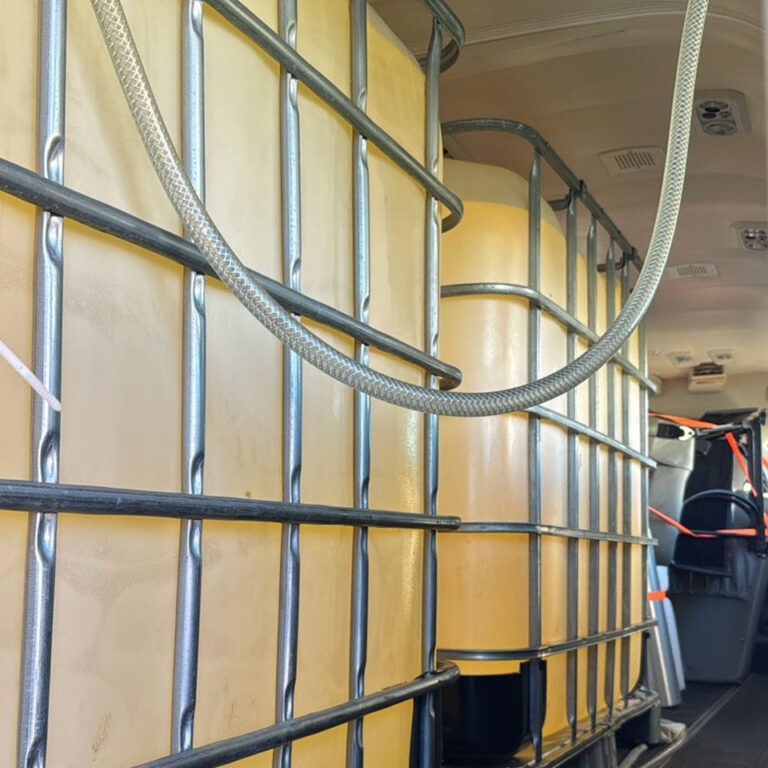
IBC tanks, also known as Flow Tanks.
Over the years, I noticed more and more ferry pilots and operators using this type of tank in aircraft with enough cargo space to accommodate them.
I have used them in aircraft such as Cessna Caravans, Twin Otters, King Airs, CASA 212s and CASA 235s, among others.
And there is a very simple reason I like them:
They work.
Simple, practical and reusable
IBC stands for Intermediate Bulk Container.
You can obtain new units or suitable, properly inspected and cleaned used units, depending on the application and requirements.
For ferry operations, the practical advantage is that the tank itself can often remain with the aircraft after delivery.
I normally take the equipment that belongs to my ferrying operation and leave the larger tank with the new owner’s maintenance organisation when appropriate.
That can include items such as pumps, filtration equipment, electrical connections and other associated hardware.
It makes the logistics considerably easier.
Don't believe everything you hear
I have heard people claim that these tanks are inherently unsafe for aviation applications.
I don’t agree with that blanket statement.
As with almost anything in aviation, the real answer depends on the specific equipment, material, installation, aircraft and engineering approval.
Many IBC containers are manufactured using materials selected for demanding chemical and industrial applications, and some have specialised internal linings.
But that does not automatically make every IBC suitable for every aircraft.
You need to know exactly what you are dealing with and make sure the installation is properly assessed and approved.
That distinction is important.
Weight distribution matters
One feature I particularly like is the construction of many IBC units.
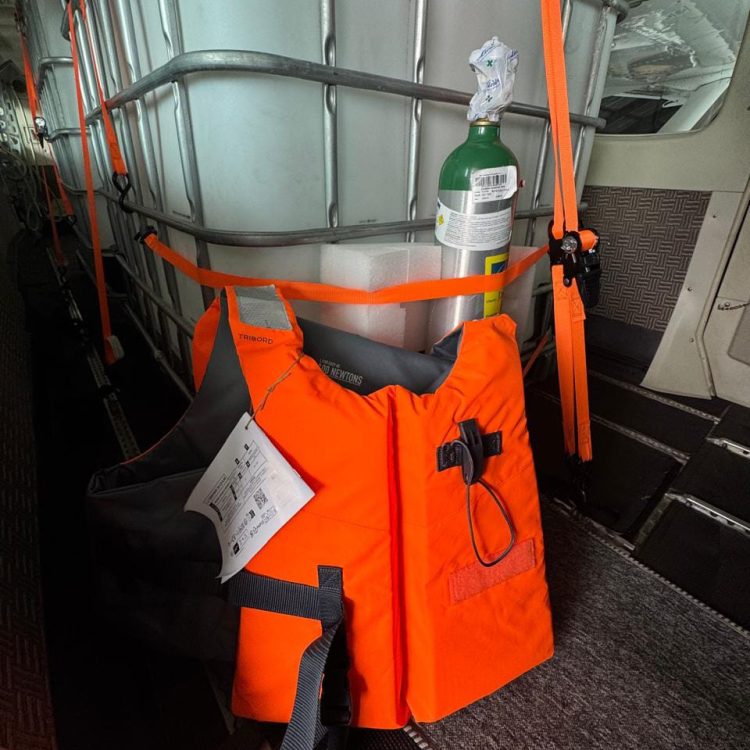
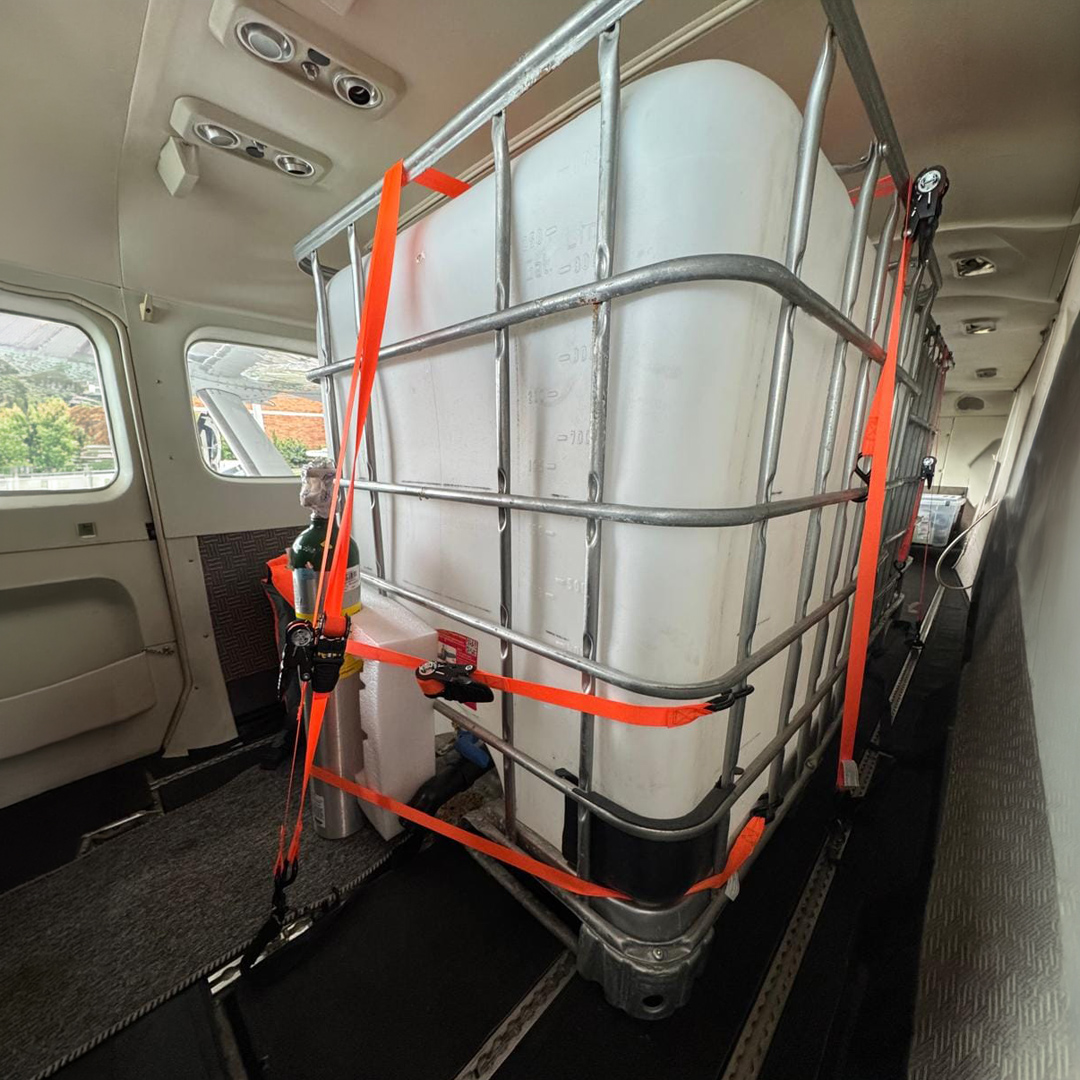
The container sits inside a protective metal cage and is normally mounted on a pallet structure.
That provides a practical way of positioning the additional fuel load while considering weight distribution and securement within the aircraft.
When you are carrying large quantities of additional fuel, weight and balance are not something you want to discover halfway through the flight.
Everything needs to be properly calculated, secured and approved before departure.
A CASA 212 and 3,000 litres of extra fuel
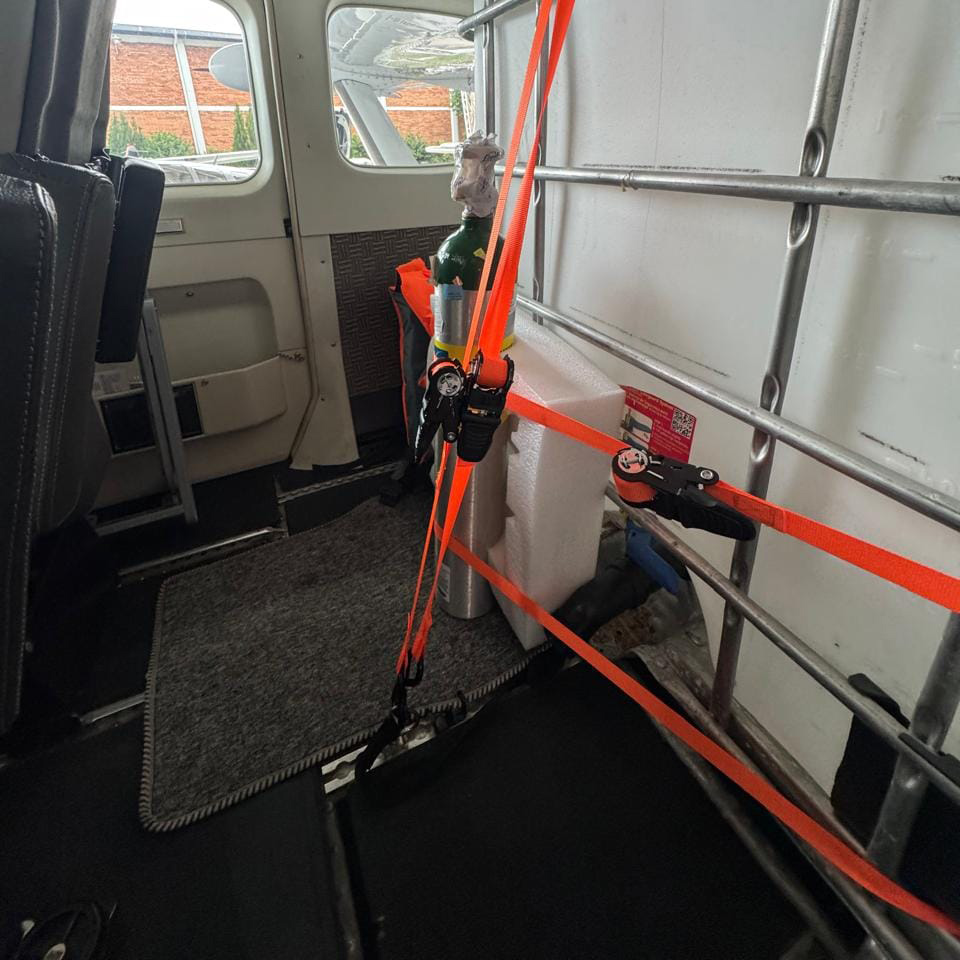
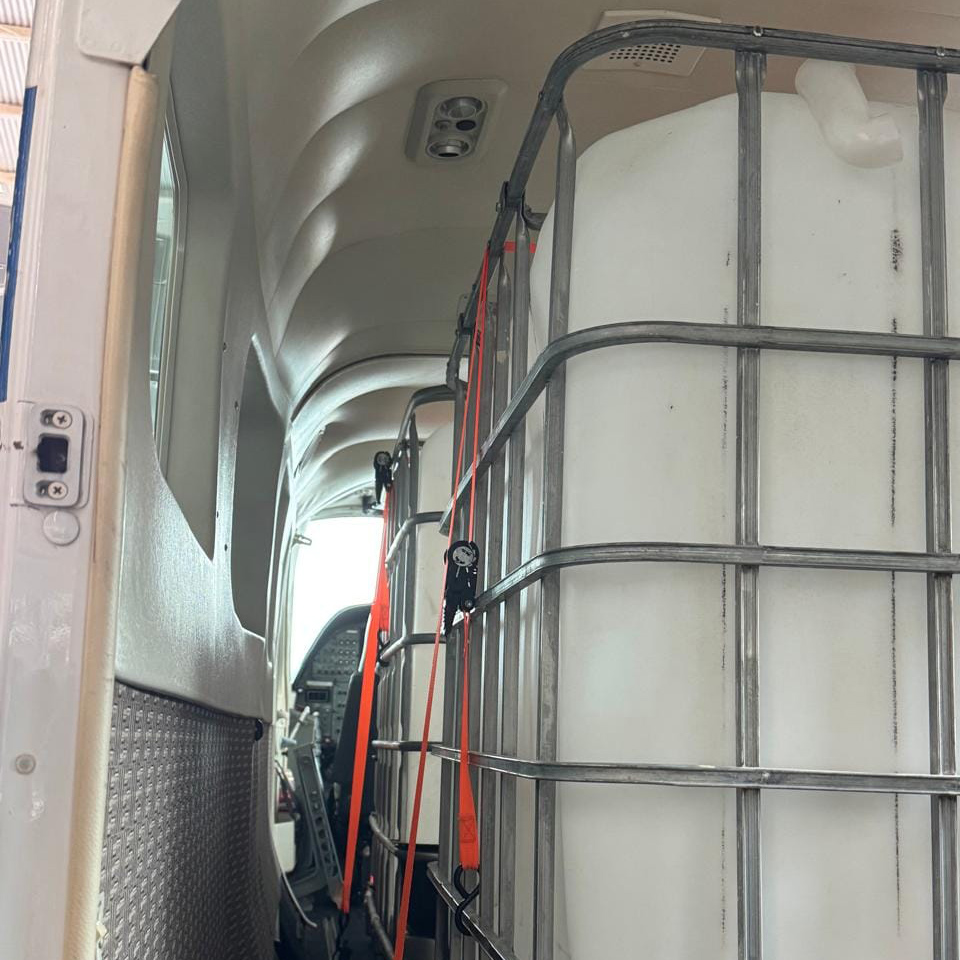
One of the photographs I will include with this article shows the interior of a CASA 212 that I ferried from the United States to Botswana for the Botswana Air Force.
And there is a little story behind that photograph.
If you look towards the rear of the aircraft, you may notice what appears to be a rather unusual piece of aviation history.
That is an old F-104 Starfighter ejection seat.
I had bought it for my man cave in Las Vegas and, naturally, decided that bringing it back to me in the same aircraft was perfectly reasonable.
Because why wouldn’t a ferry pilot transport an F-104 ejection seat halfway around the world?
It seemed like a good idea at the time!
But the really interesting part of the photograph is the fuel arrangement.
The aircraft carried three 1,000-litre tanks, providing a substantial additional fuel capacity for the long ferry flight.
The advantage was straightforward:
Fewer fuel stops.
And fewer fuel stops mean fewer opportunities for delays, paperwork, ground handling problems, airport fees and all the other little headaches that come with international ferry flying.
Less time on the ground
One of the things people sometimes forget about a long-range ferry flight is that the flying is only part of the operation.
Every additional fuel stop means:
- Landing and parking fees
- Ground handling
- Refuelling arrangements
- Customs and immigration
- Weather considerations
- More paperwork
- More time waiting around
If you can safely and legally extend the range of the aircraft, you can potentially eliminate several of those stops.
That can make an enormous difference on a long international ferry flight.
27 years teaches you a few things
After 27 years of full-time professional ferry flying, I’ve learned that there is rarely one perfect solution for every aircraft.
What works beautifully in a CASA 212 may not be appropriate for a Caravan.
What works in a Twin Otter may be completely impractical in another aircraft.
The aircraft, route, payload, regulations and engineering requirements all have to be considered.
But when the right equipment is properly selected and installed, ferry tanking can make long-distance aircraft delivery considerably more practical.
And after thousands of hours of ferry flying around the world, I am always happy when the solution is simple, reliable and does exactly what it is supposed to do.
Because in ferry flying, boring is good.
If everything goes according to plan, you simply fly the aircraft, burn the fuel and eventually see the destination runway.
That’s exactly how I like it.
The information in this article reflects the author’s personal experience and is not a recommendation to install or use any particular fuel tank or fuel system. Auxiliary fuel systems require appropriate engineering assessment, approval, securement, fuel-system design and compliance with applicable aviation regulations and aircraft limitations.